
NOM-054-SCFI-1998 is an Official Mexican Standard that specifies safety requirements for domestic pressure cookers sold, manufactured, or imported in Mexico. The standard aims to ensure consumer safety by establishing minimum safety criteria to prevent risks such as explosions, burns, or mechanical failures associated with the use of pressure cookers in household settings.
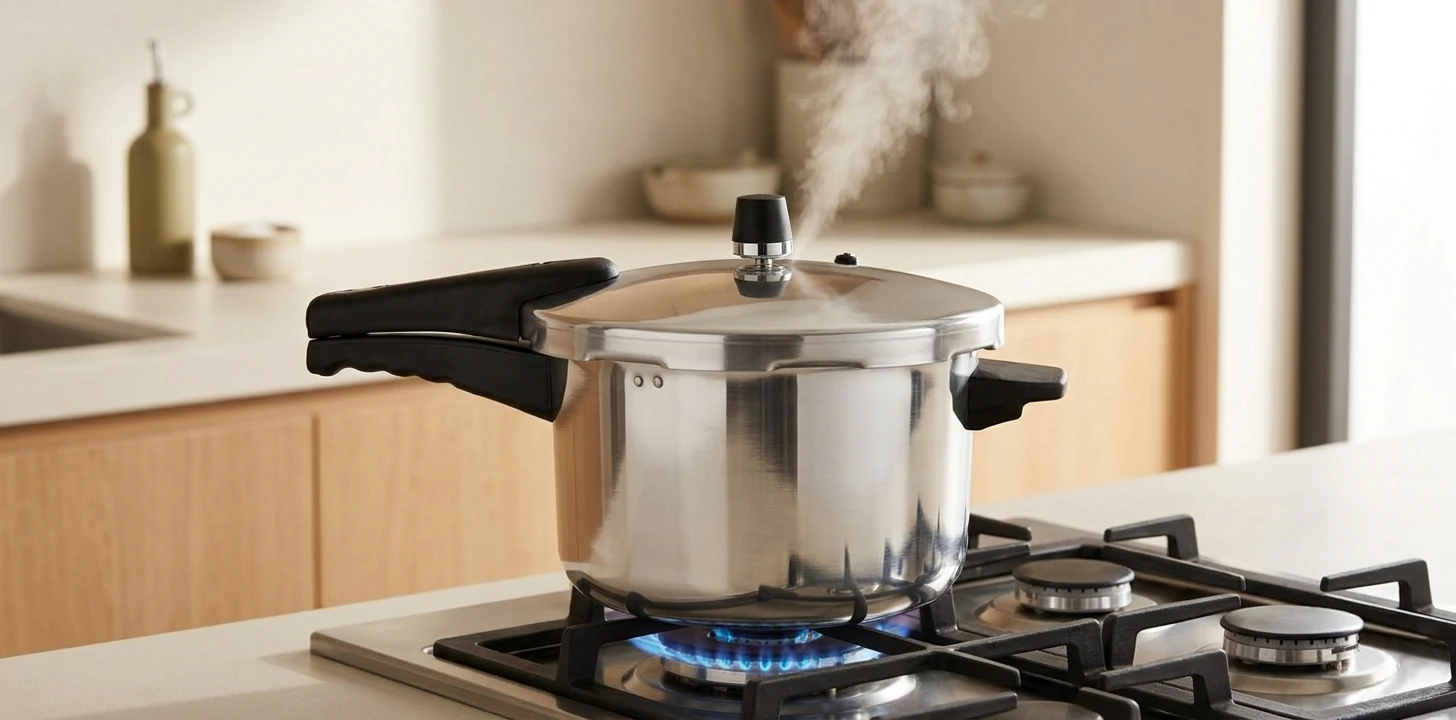
Table of Contents
NOM-054-SCFI-1998 Scope and Applicability
This NOM applies to pressure cookers designed for domestic use, which operate by generating internal pressure to cook food. These devices typically feature:
- Manual Pressure Cookers: Traditional stove-top pots with locking lids.
- A pressure-regulating valve or mechanism.
- Variable Size Units: Household models ranging from small to large capacities intended for family meals.
- Stainless Steel and Aluminum Models: Different material builds that must all adhere to the same structural integrity rules
The standard covers new pressure cookers intended for sale to the general public in Mexico, focusing on their design, construction, and operational safety.
Products Not Included in This Rule
Not every cooking vessel falls under this specific mandate. The following are exempt from NOM-054-SCFI-1998 because they require different specialized safety checks:
- Industrial Autoclaves: High-capacity sterilization equipment used in hospitals or laboratories.
- Commercial Grade Steamers: Large-scale kitchen equipment designed for industrial food production.
- Standard Stock Pots: Conventional pots that do not use pressure to cook food.
- Electric Multi-cookers: Modern electronic appliances that often fall under specific electrical safety standards (like NOM-003- or NOM-003).
Essential Safety and Protective Features
To protect the user, NOM-054-SCFI-1998 requires specific physical features that prevent the pot from becoming a hazard:
- Pressure Relief Mechanisms: Every pot must have at least two independent safety valves to release excess steam if the primary vent becomes blocked.
- Secure Locking Systems: The lid must be designed so it cannot be opened while there is still significant internal pressure.
- Heat-Resistant Handles: Handles must be made of materials that stay cool to the touch and are strong enough to support the weight of a full pot without breaking.
- Gasket Integrity: The sealing ring must be flexible enough to provide a perfect seal but designed to fail safely if pressure reaches dangerous levels.
Reliable Performance and Stability
A safe pressure cooker must behave predictably. The NOM-054-SCFI-1998 outlines performance metrics such as:
- Structural Strength: The body of the pot must withstand pressures significantly higher than its normal operating range without deforming.
- Corrosion Resistance: Materials must not react with food or water in a way that weakens the metal over time.
- Consistent Venting: The primary regulator must maintain a steady internal pressure to ensure even cooking and safety.
Laboratory Testing and Quality Checks
To prove compliance with NOM-054-SCFI-1998, products undergo extreme “stress tests” in controlled environments:
- Hydrostatic Pressure Test: The pot is filled with water and pressurized to its breaking point to ensure its bursting pressure is well above safety limits.
- Safety Valve Activation: Technicians verify that relief valves open exactly at the pressure levels specified by the manufacturer.
- Handle Durability: Repeated stress is applied to the handles to simulate years of lifting and moving the pot.
- Sealing Cycle Tests: The gasket and lid are tested through hundreds of cycles to ensure they don’t leak or degrade prematurely.
Clear Labeling and Safety Information
The information on the product is a vital part of NOM-054-SCFI-1998. Each pot must clearly display:
- Operating Capacity: The maximum level to which the pot can be safely filled.
- Manufacturer Data: Brand name, model number, and where it was made.
- Safety Markings: The NOM symbol must be visible to confirm it is a certified product.
- Instruction Manual in Spanish: Every unit must include a clear guide on how to use, clean, and maintain the safety valves.
Official Certification and Compliance
Legally selling a pressure cooker in Mexico requires a formal validation process:
- Compliance Certificate: Issued by a recognized Certification Body after reviewing all lab reports.
- Authorized Laboratories: Only testing facilities accredited by the EMA (Entidad Mexicana de Acreditación) can perform the tests for NOM-054-SCFI-1998.
- Batch Verification: Regulators may inspect specific production lots to ensure that every pot on the shelf is as safe as the one tested in the lab.
Who Enforces These Safety Rules?
The safety net for the consumer is maintained by several government and private entities:
- PROFECO: This agency monitors retail stores and can order a recall if a pot is found to be dangerous or if the labeling is misleading.
- Customs Authorities: They verify that imported pots have their NOM-054-SCFI-1998 certification before they can enter the Mexican market.
- DGN (Dirección General de Normas): The authority that sets the technical parameters and ensures the standard remains up to date.
Purpose and Enforcement:
The standard’s primary goal is to protect consumers from the inherent risks of pressure cookers, which, if poorly designed or misused, can lead to severe accidents. Enforcement is managed by the Dirección General de Normas and PROFECO (Federal Consumer Protection Agency), with customs authorities verifying compliance for imports. Non-compliance—such as inadequate safety valves or missing labels—can result in fines, product seizure, or market bans.

Accelerate Today Your Entry into the Mexican Market
We offer specialized consultancy services to guide you through every step of the certification process.
- Expert Guidance: We help you interpret technical requirements and select the appropriate testing laboratories.
- Efficiency: Our streamlined approach reduces time-to-market, ensuring your products are ready for sale faster.
Don’t let regulations slow down your growth. Let us handle the technicalities while you focus on scaling your business. Contact us.